Ways That Clear Aligners Differ From Traditional Aligners
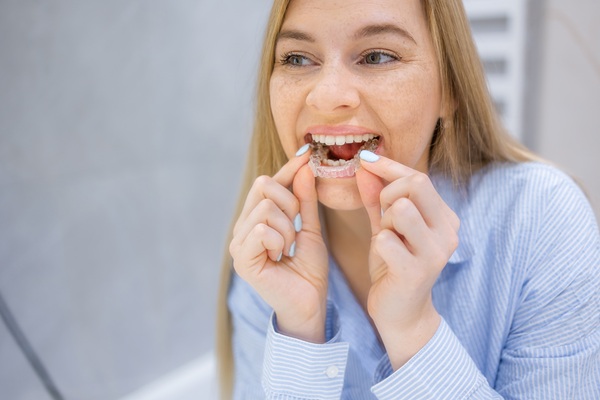
Clear aligners are becoming increasingly popular and many are choosing them over traditional braces. They offer a range of benefits, which include a discreet treatment option, the ability to remove them while eating and brushing teeth and faster treatment times on average.
A review of clear aligners for a straighter smile
Learning more about how clear aligners differ from traditional braces and why so many patients are choosing them as their preferred method of treatment, you can decide if they are right for you. The following review explains what clear aligners are, how they differ from traditional aligners (braces) and how the clear aligners treatment process works.
Clear aligners explained
Clear aligners are a method of teeth straightening that use a transparent tray known as an aligner. The aligners are custom-fit and worn over teeth, gradually pulling them into an ideal teeth alignment. They are recommended for patients with a mild to moderate malocclusion and can fix issues such as crooked and overcrowded teeth. Treatment typically takes less than two years and is shorter on average than traditional braces.
Clear aligners vs. traditional braces
Clear aligners achieve the same purpose as traditional braces, which is to straighten your smile and fix jaw and teeth misalignments. However, clear aligners offer benefits that traditional braces do not, which includes:
- Transparent aligners
- Removable aligners
- Faster treatment times
- Fewer dietary restrictions
Clear aligners are typically ideal for adults who want a treatment system that is less visible and obvious. In fact, many patients are able to straighten their smile without anyone knowing unless they tell them.
How clear aligners treatment works
During the first visit for clear aligners, the dentist will conduct an oral examination to determine all available treatment options and if any dental treatment is necessary before starting clear aligners (tooth extraction, cavity fillings, deep dental cleaning, etc.). They will then put together a treatment plan. Once the patient is ready, a dental impression is taken to custom-make the clear aligners, and the treatment process starts once they arrive. The patient receives new aligners periodically, and the treatment process takes between six months to two years to complete.
The ideal candidate for clear aligners
Clear aligners work best for minor to moderate misalignments. However, braces are often necessary for severe concerns. Therefore, anyone with a misalignment of the teeth or jaw that feels insecure with the appearance of their smile or finds it harder to care for their oral health should consider clear aligners treatment. Specifically, clear aligners can address the following concerns:
- Crowding
- Crooked teeth
- Spacing issues
- Protruding teeth
- Bite complications
The best way to determine if you are a good candidate for clear aligners treatment is to arrange a consultation visit with a dental professional.
Get started with clear aligners treatment today
You can start the clear aligners treatment process by scheduling a consultation with our dental team today. We guide our patients through each step of treatment, and we will help you decide if clear aligners, traditional braces or another form of treatment is best for you.
Request an appointment here: https://pewaukeesmilesdentistry.com or call Pewaukee Smiles Dentistry at (262) 695-8600 for an appointment in our Pewaukee office.
Related Posts
A smile makeover offers a fresh start for anyone looking to boost their confidence with a more radiant, balanced appearance. Oftentimes, this transformation involves much more than just a quick fix or a surface-level change. Choosing the right dentist ensures your plan respects the unique anatomy and overall goals.Dream results begin with a healthy foundation…
Persistent jaw discomfort often relates to the temporomandibular joint (TMJ), the hinge-like joint that connects the lower jaw to the skull. This vital joint facilitates the thousands of movements required for daily tasks such as eating, speaking, and yawning. When dysfunction occurs, the muscles and ligaments surrounding the joint become strained, leading to chronic tension…
Deciding to get dental veneers is a major step toward a confident smile, which is why dentists want to ensure patients feel comfortable about every aspect of this treatment. That includes the material of the veneers. Some patients prefer the convenience of composite resin, while others enjoy the look and feel of porcelain. Knowing the…
Dental crowns function as protective caps for severely damaged or decayed teeth. These restorations use durable materials such as porcelain-fused-to-metal, zirconia, or ceramic to withstand the daily pressures of chewing. However, even the most resilient dental crowns can experience structural fatigue or adhesive failure. Identifying the symptoms of a damaged dental crown is the first…